Optimizing Kjeldahl Analysis with New Titration Technology
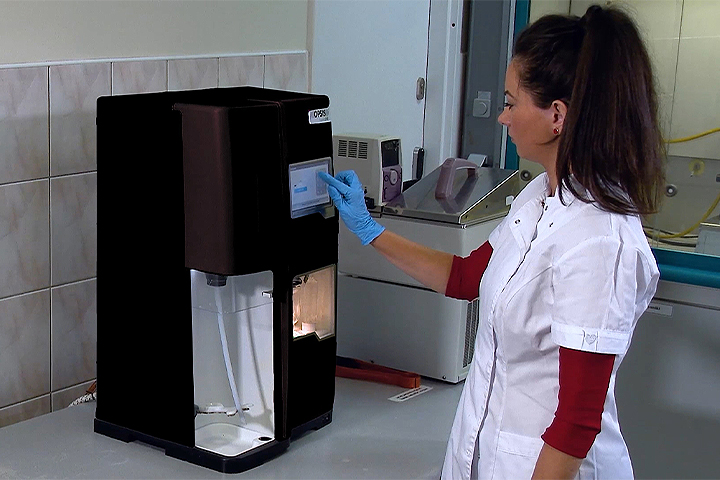
In the world of analytical chemistry, determining protein content in samples is a cornerstone process, especially in food, agriculture, and environmental testing. The Kjeldahl method, named after its inventor Johan Kjeldahl over a century ago, remains the standard for Total Kjeldahl Nitrogen (TKN) analysis.
But as technology evolves, so do the tools that make this method faster, more accurate, and less prone to errors. In this blog I will be explaining how different titration technologies can affect the Kjeldahl analysis.
The Kjeldahl Method
At its core, the Kjeldahl method involves three key steps: digestion, distillation, and titration. Digestion breaks down the sample to convert nitrogen into ammonium sulfate. During distillation, alkali is added to liberate ammonia gas, which is then captured in a receiver solution, typically boric acid. Finally, titration quantifies the ammonia by neutralizing it with a standard acid, allowing us to calculate the nitrogen and thus protein content.
Historically, titration was a manual, labor-intensive task using a burette, prone to human error, and requiring skilled operators. The 1980s brought automation, with Kjeldahl analyzers handling distillation and titration seamlessly. These instruments dispense water and alkali into sample tubes, generate steam for distillation, collect ammonia in a receiver vessel, and perform the titration – all while minimizing variations from handling, weighing, or titrant preparation.
The chemical reactions are straightforward:
- Alkalization: (NH4)SO4 + 2NaOH → 2NH3 + 2H2O + Na2SO4
- Capture: NH3 + H3BO3 → NH4⁺ + H2BO3⁻
- Titration: H2BO3⁻ + H⁺ → H3BO3
But some potential pitfalls lie in the titration step. Modern Kjeldahl analyzers use one of two main titration methods: pH electrode or colorimetric. Each has its strengths, but they differ significantly in design, maintenance, and performance.
Different Technologies
The pH Titration method measures pH directly using an electrode, which detects electrical differences in the solution. It's precise when calibrated against known buffers, but calibration is a must, often daily, to ensure accuracy. Without it, readings can drift. pH electrodes are also slower to respond to changes, making them better suited for separate distillation and titration processes. Plus, they have a limited lifespan and can be sluggish in dynamic environments.
Colorimetric titration relies on a color change in an indicator solution (such as bromocresol green and methyl red) to signal the endpoint, matching the ideal pH for ammonia titration. No calibration is needed because the indicator always shifts at the same pH. This makes it ideal for continuous titration, where distillation and titration happen simultaneously. Sensors detect the color without contacting the liquid, reducing maintenance, and extending component life.
Both methods deliver comparable results, but colorimetric titration shines in Kjeldahl laboratories for its low upkeep and reliability. The KjelROC Analyzer uses a colorimetric solution, positioning the lamp and sensor outside the vessel to avoid liquid exposure entirely.
While both methods can yield similar results, colorimetric titration offers significant operational advantages:
|
Feature |
pH Electrode (Analogue) |
Colorimetric (Digital) |
|
Calibration |
Requires constant calibration against known solutions |
No calibration needed; the indicator always changes at the same pH. |
|
Sample Contact |
Physical contact with the sample leads to coating and aging. |
No physical contact; the sensor and lamp are mounted outside the vessel. |
|
Maintenance |
High maintenance due to electrode lifespan and drift |
Minimal maintenance; digital sensors do not drift over time. |
Our digital RGB sensors are factory-set and extremely robust. Any variations in absolute and surrounding light values are automatically compensated for by the initial blank analysis, ensuring the "delta" (the final result) remains constant and correct.
Speeding Things Up with Less Errors: Separate vs. Continuous Titration
Traditional setups often separate distillation and titration, either with two instruments or in sequence within one. This reduces errors from manual handling but slows the process, titration can't start until distillation finishes. A slow process is also increasing the lost nitrogen, if it evaporates from the distillate while waiting.
Continuous titration integrates the steps, making analysis faster and with less errors. The challenge? Rapidly responding to incoming distillate to avoid over-titration. Older methods add titrant incrementally until the endpoint is detected, but advanced algorithms can take it further.
The Predictive Titration Algorithm from OPSIS LiquidLINE uses advanced math to analyze the distillation process and predict optimal dosing from the burette. It considers not just the current color but predictive calculations, delivering higher precision and lower detection limits than standard titrators. Crucially, titration is fully integrated with distillation, not separated, for seamless operation.
Accuracy Matters: Titrator Resolution and Error Minimization
High-resolution dosing is key to accurate results. The standard KjelROC employs a burette with a tiny 1.95 µl/step resolution, ensuring fine control over titrant addition. Optionally the Analyzer can also be used with our 1.1 µl/step resolution burette.
Other concerns might be air bubbles that form overnight and that can skew dosing. Residue from previous samples can contaminate results and this should always be considering in an instrument. A well-designed glass splash head ensures only gas reaches the condenser, and the system cleans it thoroughly between runs. The KjelROC is using several solutions to minimize these problems.
Why This Matters for Laboratories Today
In a fast-paced laboratory environment, efficiency, accuracy, and low maintenance are non-negotiable. By leveraging colorimetric titration, continuous processes, and smart design, instruments such as the KjelROC are setting new benchmarks in Kjeldahl analysis. Whether you're testing food proteins or environmental samples, these optimizations reduce errors, speed up workflows, and deliver trustworthy data.
If you're in the market for a Kjeldahl analyzer, consider how these technologies align with your needs. For more details on digestion or related applications, please request our OPSIS LiquidLINE Application Guide by mailing to info@opsis.se >>
Author: Olle Lundström, OPSIS LiquidLINE
See our product portfolio on Kjehdahl instruments on our Product page >>
Learn about the Challenge when Measuring Low Levels of Nitrogen in Starches >>